

Adjusting the cutting position on an industrial band saw machine is a crucial skill that can significantly impact the quality and efficiency of your cutting operations. As an Industrial Band Saw Machine supplier, I've witnessed how accurate cutting position adjustment can transform a project from mediocre to outstanding. In this blog, I'll share some in - depth knowledge on how to adjust the cutting position on an industrial band saw machine.
Understanding the Basics of an Industrial Band Saw Machine
Before delving into the adjustment process, it's essential to have a solid understanding of the key components of an Industrial Band Saw Machine. The main parts include the band saw blade, the guide wheels, the worktable, and the feed mechanism. The band saw blade is the cutting tool that rotates around the guide wheels. The worktable is where the material to be cut is placed, and the feed mechanism moves the material towards the blade at a controlled speed.
The cutting position refers to the exact location on the material where the blade will make the cut. This position needs to be precise to ensure the correct dimensions and shape of the final product. Any miscalculation or improper adjustment can lead to wasted materials, inaccurate cuts, and a decrease in overall productivity.
Initial Setup and Inspection
The first step in adjusting the cutting position is the initial setup and inspection of the machine. Start by ensuring that the machine is properly installed and leveled. An uneven machine can cause the blade to cut at an angle, leading to inaccurate cuts. Check the tension of the band saw blade. A blade that is too loose may wander during the cutting process, while a blade that is too tight can cause premature wear and breakage.
Inspect the guide wheels for any signs of damage or wear. Worn guide wheels can affect the stability of the blade and lead to cutting errors. Make sure that the guide blocks are properly aligned with the blade. The guide blocks help to keep the blade in place during the cutting process and prevent it from vibrating or deflecting.
Measuring and Marking the Material
Once the machine is set up and inspected, it's time to measure and mark the material. Use a high - precision measuring tool such as a caliper or a micrometer to measure the dimensions of the material. Mark the cutting line clearly on the material using a scribe or a marker. Make sure that the marking is visible and accurate.
If you are cutting multiple pieces of the same size, it's a good idea to create a template. A template can help you to ensure that all the cuts are made at the same position and with the same dimensions. You can make a template from a piece of scrap material that is similar to the material you are cutting.
Adjusting the Worktable
The worktable is one of the most important components when it comes to adjusting the cutting position. Most industrial band saw machines allow you to adjust the position of the worktable horizontally and vertically.
To adjust the horizontal position of the worktable, loosen the locking bolts that hold the worktable in place. Then, use the adjustment screws or the handwheel to move the worktable to the desired position. Once the worktable is in the correct position, tighten the locking bolts to secure it.
The vertical adjustment of the worktable is also crucial, especially when cutting materials of different thicknesses. Loosen the appropriate locking mechanism and use the adjustment device to raise or lower the worktable. Make sure that the top surface of the worktable is parallel to the path of the blade.
Using the Fence
A fence is a useful accessory that can help you to maintain a consistent cutting position. It acts as a guide for the material, ensuring that it is fed into the blade at a right angle.
To use the fence, first, make sure that it is properly aligned with the blade. Most fences can be adjusted horizontally and vertically. Loosen the locking screws and move the fence to the desired position. You can use a square to check the alignment between the fence and the blade. Once the fence is aligned, tighten the locking screws to secure it.
When feeding the material through the blade, keep it firmly against the fence. This will help to ensure that all the cuts are made at the same position and with the same quality.
Adjusting the Blade Tracking
Proper blade tracking is essential for accurate cutting. The blade should run smoothly along the center of the guide wheels. If the blade is not tracking correctly, it can cause uneven cutting and premature blade wear.
Most industrial band saw machines have a blade tracking adjustment mechanism. This mechanism usually consists of a tracking knob or a screw that allows you to move the guide wheels slightly to adjust the blade's path.
To adjust the blade tracking, start the machine and let the blade run for a few seconds. Observe the position of the blade on the guide wheels. If the blade is running towards one side, turn the tracking adjustment knob in the opposite direction. Make small adjustments and check the blade's position after each adjustment until it runs smoothly along the center of the guide wheels.
Using Digital Readouts and CNC Systems
In modern industrial band saw machines, digital readouts and Computer Numerical Control (CNC) systems are becoming increasingly popular. These technologies can greatly improve the accuracy and efficiency of cutting position adjustment.
Digital readouts provide real - time information about the position of the worktable, the blade, and other components. They allow you to make precise adjustments with a high degree of accuracy. Simply enter the desired cutting position into the digital readout, and the machine will automatically move the components to the correct location.
CNC systems take this a step further. With a CNC Metal Cutting Band Saw, you can program the cutting positions and dimensions into the system. The machine will then execute the cuts with extreme precision, repeating the process as many times as needed. This is especially useful for large - scale production runs, where consistency and accuracy are of utmost importance.
Troubleshooting Common Issues
Even with proper adjustment, you may encounter some common issues during the cutting process. One of the most common issues is blade drift, where the blade cuts at an angle instead of a straight line. This can be caused by several factors, including incorrect blade tension, worn guide wheels, or an uneven worktable.

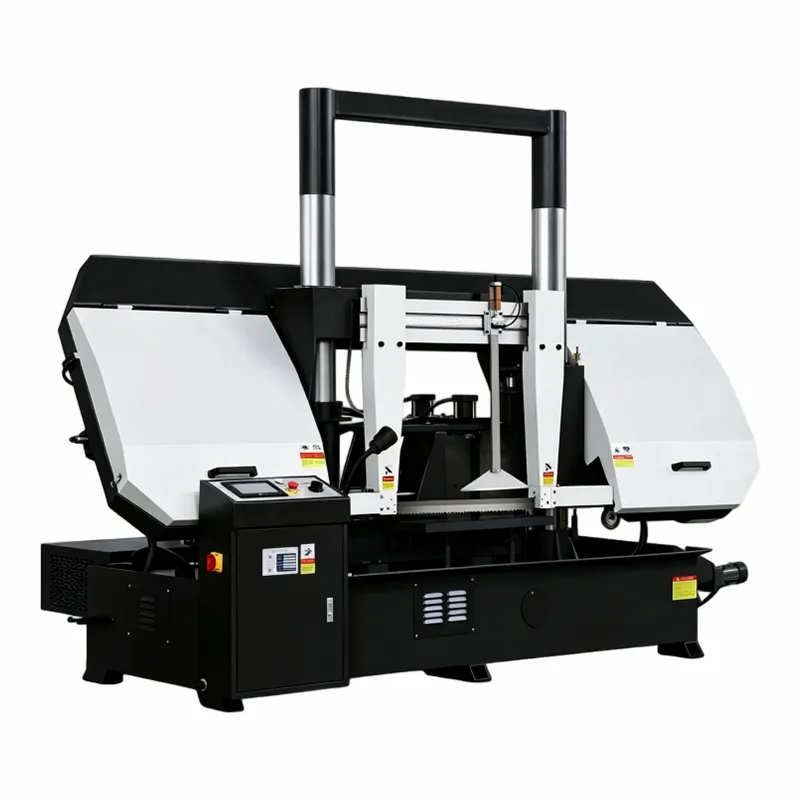
If you notice blade drift, first check the blade tension. Adjust it if necessary. Inspect the guide wheels for wear and replace them if they are damaged. Make sure that the worktable is level and properly aligned with the blade.
Another issue is uneven cutting, where the cut is thicker on one side than the other. This can be due to a misaligned fence or a problem with the blade tracking. Check the alignment of the fence and adjust the blade tracking as described above.
Conclusion
Adjusting the cutting position on an industrial band saw machine is a multi - step process that requires attention to detail and a good understanding of the machine's components. By following the steps outlined in this blog, you can ensure accurate and efficient cutting operations.
As an Industrial Band Saw Machine supplier, we offer a wide range of Automatic Feed Horizontal Band Saw and Automatic Horizontal Band Saw machines that are designed to provide precise cutting results. If you are interested in improving your cutting operations or need more information about our products, we encourage you to contact us for procurement and further discussions. Our team of experts is ready to assist you in finding the best solution for your specific needs.
References
- "Industrial Band Saw Machine Operation Manuals" from leading manufacturers.
- Technical articles on metal cutting and band saw technology in industry magazines.


